


Filters
Set Price Range
Rs. 0
Rs. 10000
Course Type
Category
Course Level
User Type
Subjects
 ECED🎓 STUDENT
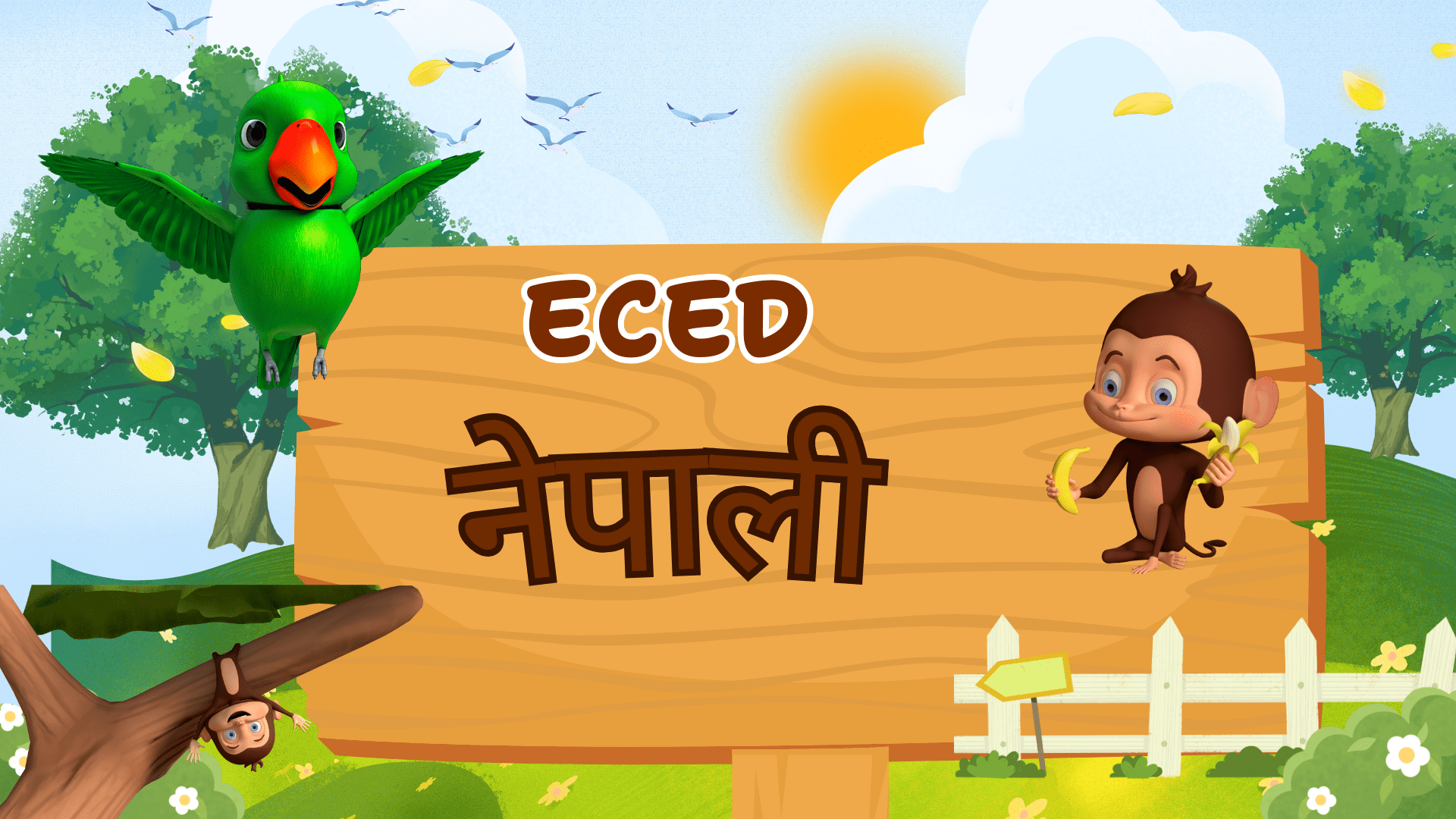
नेपाली ECED
NEPALI — ECED (Early Childhood Education & Development) साथी/शिक्षक दुवैका लागि सरल र स्पष्ट पाठ्यक्रम वर्णन। Teacher View — शिक्षकका लागि Course Overview: यो पाठ्यक्रम ३-५ बर्ष उमेरका बालबालिकाका लागि तयार पारिएको छ। उद्देश्य: नेपाली भाषा र अक्षर-शब्द चिनाउने, साधारण बोली-व्यवहार र सामाजिक सीप विकास गर्नु हो। Learning goals (शिक्षण लक्ष्य): अक्षर र ध्वनि चिन्न सुरु गर्ने। सजिलो शब्दहरू बनाएर पढ्ने र बोल्ने अभ्यास गर्ने। दैनिक जीवनका विषयहरू बारे शब्दावली र संवाद सिकाउने। साँस्कृतिक चाडपर्व तथा व्यवहारिक क्रियाकलापहरूमा सहभागी गराउने। Teaching tips (शिक्षण सुझाव): सिर्जनात्मक खेल, गीत, र क्रियाशील गतिविधि प्रयोग गर्नुहोस्। स्लो र स्पष्ट उच्चारण गर्नुहोस् र धेरै दोहोर्याउनुहोस्। प्राकृतिक वस्तु, तस्विर, र वास्तविक वस्तु देखाएर सिकाउनुहोस्। साना समुहमा काम गराउनुहोस् र सकारात्मक प्रतिक्रिया दिनुहोस्। Assessment & Progress: अवलोकनात्मक मूल्याङ्कन (observation) र साधारण कार्यपत्र/पुनरावृत्तिहरू मार्फत प्रगति जाँच्नुहोस्। Suggested classroom activities (केही गतिविधि) नाम र परिचय खेल (मेरो परिचय)। शरीरका अङ्गहरू देखाएर गीत र नृत्य। परिवार र घरका तस्बिर बनाएर चर्चा। खाना/पहिरन/चाडबाड सम्बन्धी दृश्य कथा बनाउनु। अक्षर खेल र कार्ड म्याचिंग (अ, आ, इ ...) Note: प्रत्येक शीर्षकलाई साप्ताहिक/दैनिक सत्रमा 'रिपीट' र 'रिभिजन' राख्नुहोस्। छोटो सत्र (10–15 मिनेट) बालबालिकाको ध्यानकाल लाई ध्यानमा राखेर व्यवस्थित गर्नुहोस्।
 ECED🎓 STUDENT
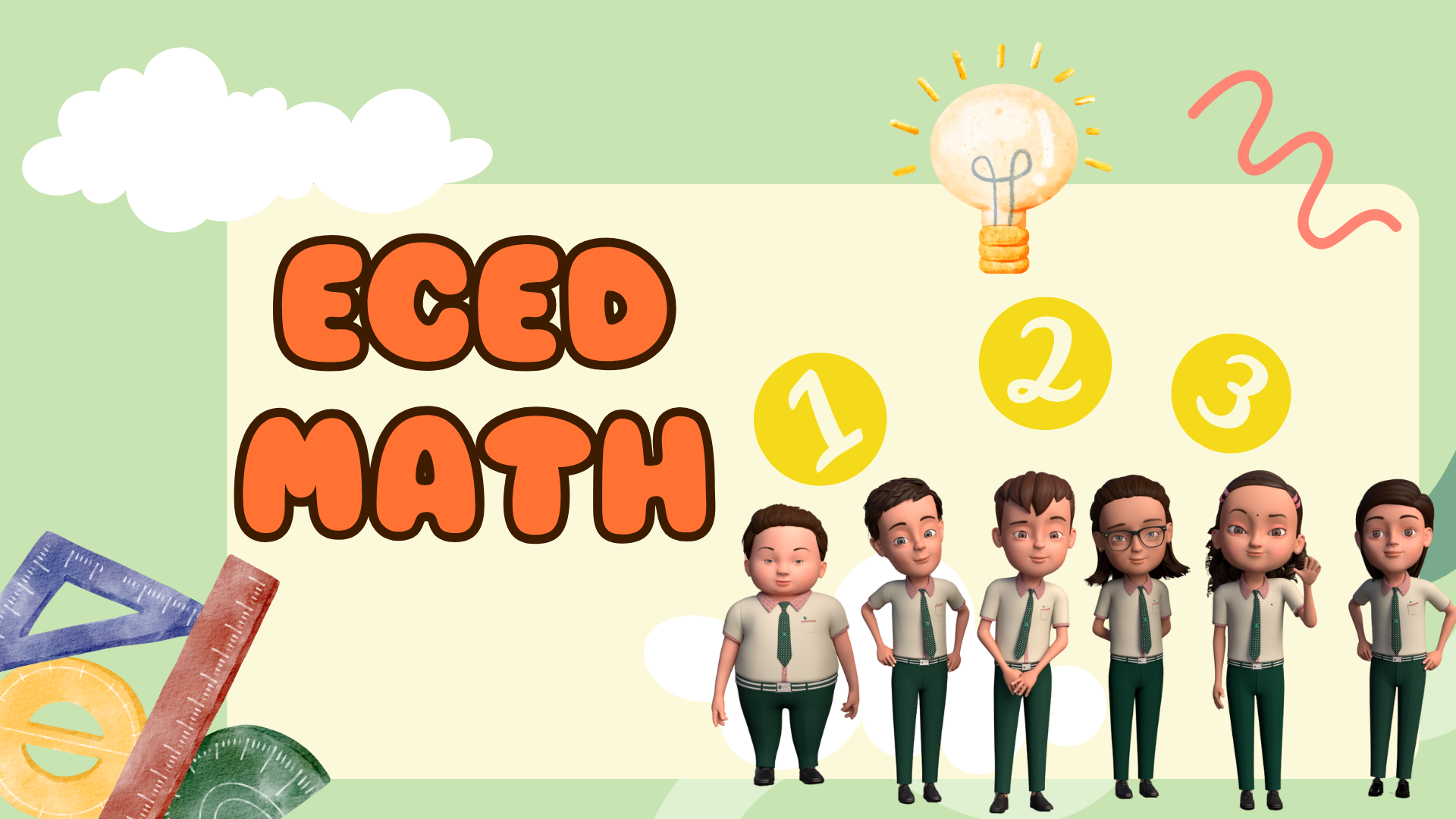
Maths ECED
ECED Math Course Description Course Overview This Early Childhood Education and Development (ECED) Math course is designed for children aged 3-5 years. It introduces young learners to fundamental mathematical concepts through fun, interactive, and hands-on activities. Children explore numbers, shapes, sizes, patterns, measurement, time, and money in a playful way that builds logical thinking and problem-solving skills. Benefits Develops counting, number recognition, and basic arithmetic skills Enhances observation and reasoning abilities Encourages creativity and problem-solving Introduces spatial awareness and positional understanding Builds confidence in handling everyday mathematical concepts Target Audience Children aged 3-5 years Early childhood educators and teachers Parents and caregivers supporting early learning Learning Experience Children will enjoy interactive activities and games to learn about: Sizes and comparison: Big & Small, Tall & Short, Long & Short Positions and directions: Above & Below, Near & Far, Infront & Behind, Left & Right Shapes and lines: Triangle, Square, Circle, Straight & Curved Lines Numbers: Counting 0-50, Ones & Tens, Devanagari Numbers Basic arithmetic: Addition & Subtraction (up to 10), Repeated Addition Time, ordinal numbers, and money concepts All activities are designed to make learning fun, engaging, and practical. Teacher Tips Use visual aids, toys, and real-life objects to demonstrate concepts Encourage children to participate actively through games and exercises Reinforce concepts with repetition and praise Relate math to daily activities, like counting fruits or telling time Focus on understanding rather than memorization for long-term learning
 ECED🎓 STUDENT
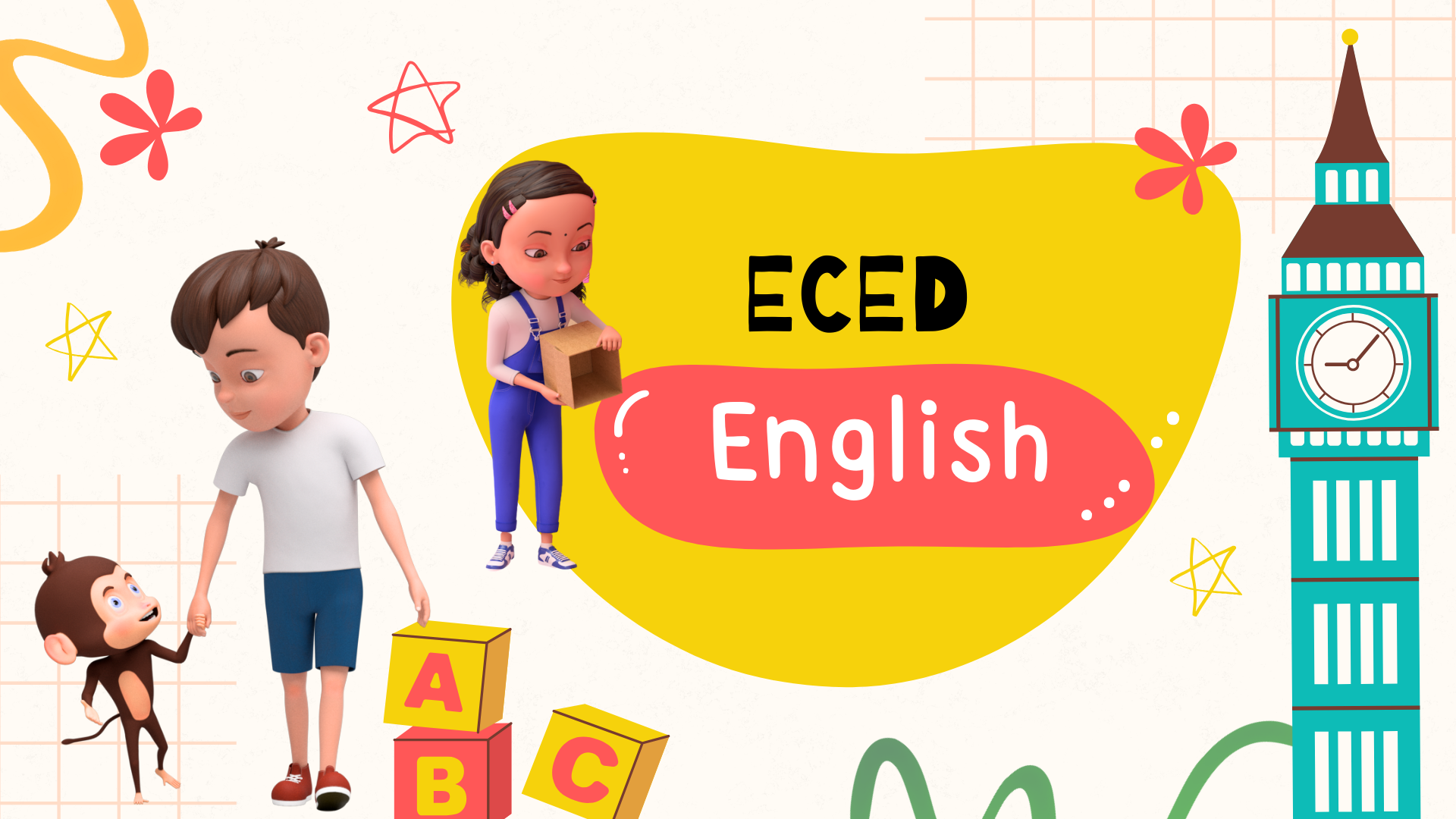
English ECED
ECED English — Course Description Course overview This Early Childhood Education & Development (ECED) English course is designed for children aged 3–5 years . The course builds foundational language, communication, and early literacy skills through playful, activity-based lessons. It covers greetings and daily expressions, alphabet familiarity (A–Z), body parts and senses, routines, classroom vocabulary, family and home topics, colors, simple sentences, emotions, festivals, and revision sessions to reinforce learning. Who is this for? Children aged 3–5 years (pre-primary / playgroup / nursery) ECED teachers and caregivers seeking structured lesson plans Parents who want guided activities to support language development at home Learning goals Recognize and say common greetings and time-of-day phrases (Hello, Namaste, Good morning/night). Develop phonemic awareness and familiarity with the English alphabet A–Z through repeated, multi-sensory practice. Name basic classroom items, family members, rooms of the house, and common body parts and senses. Build simple sentence fluency: "My name is…", "My school’s name is…", "May I…?" Identify colors, days of the week, routines, emotions and practice good habits. Use songs, games and hands-on activities to reinforce vocabulary and concepts. Structure & key topics (high level) Introductions & Greetings: Hello, Namaste, Good morning/afternoon/night, Time of the day Family & Home: My family, Rooms of the house, Bed/Bag/Books Alphabet: A — Z with repeated practice across lessons Body & Health: Sense organs, body parts, brush your teeth, good habits Routines & Classroom: Morning/Afternoon/Evening routines, My classroom, Going to school Language Use: Making simple sentences, "May I?", Magic words, "You say, I do" Creative & Motor: Lines (straight/curved), colors (primary & secondary), origami Play & Games: Indoor/outdoor games, simple role-play Festivals & Culture: Dashain, Tihar, Lhosar (introduce cultural vocabulary) Revision: Regular revision lessons to consolidate learning Benefits for children Stronger listening and speaking skills through repetition and song. Early alphabet awareness and readiness for reading. Improved social language: greetings, polite requests, classroom interaction. Confidence in using short sentences and expressing basic needs/emotions. Better fine motor skills via drawing, origami and tracing lines. Teacher / Caregiver guidance (quick tips) Keep sessions short (10–20 minutes) with frequent movement breaks. Use songs, puppets and picture cards for each alphabet and topic. Model simple sentences and invite children to repeat in chorus then one-by-one. Pair vocabulary with actions (touch nose for "nose", point to "classroom"). Use daily routines (morning circle, snack time) to practice "May I?" and polite phrases. Involve parents: send home 1–2 simple activities after each topic (draw, name family members). Assess informally by observing ability to name 5–10 words from each topic and to say simple sentences.
 ECED🎓 STUDENT
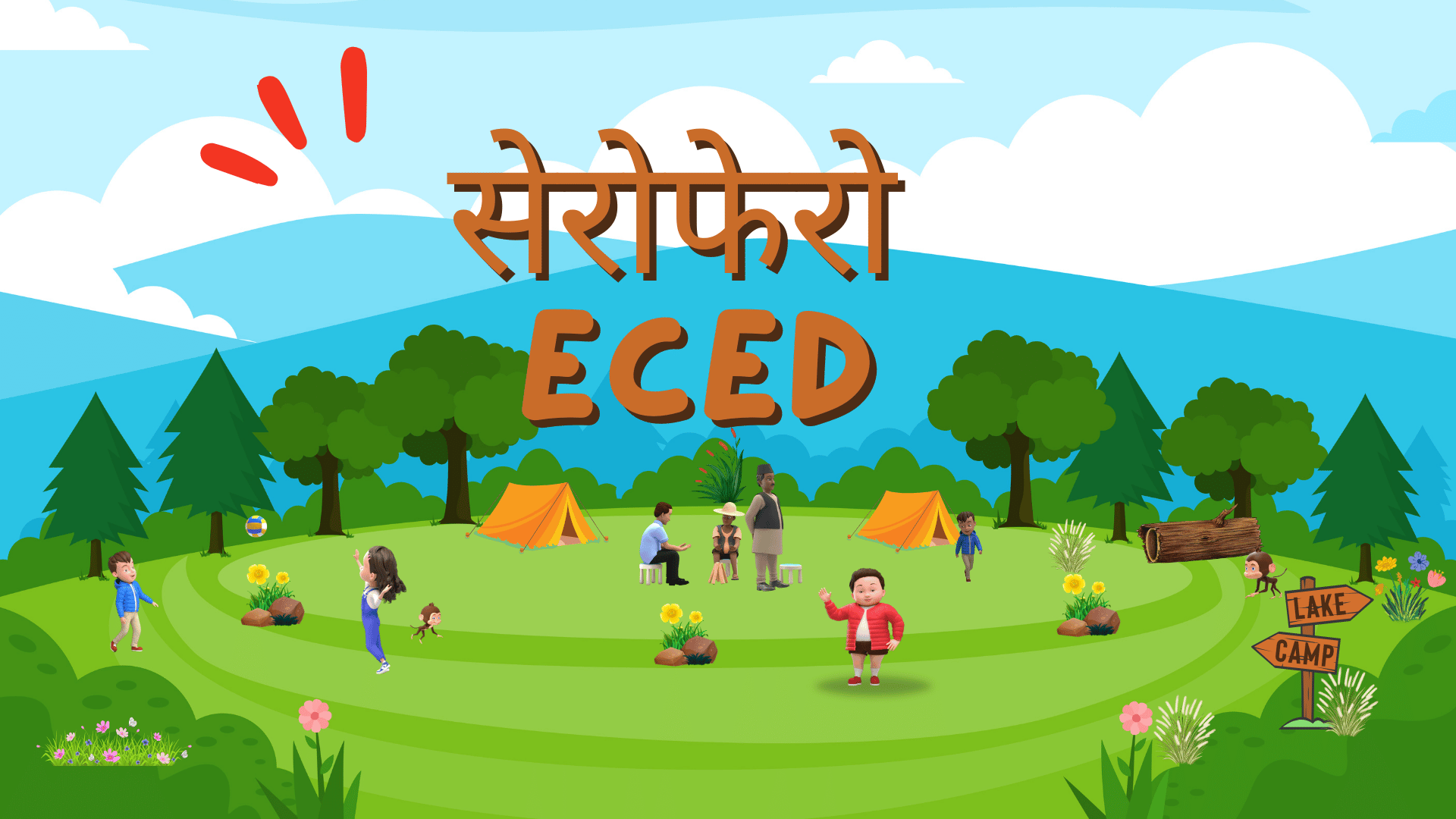
सेरोफेरो ECED
सेरोफेरो ECED कोर्स — विवरण (उमेर ३–५ वर्षका बालबालिकाका लागि) यो कोर्स बालबालिकाको प्रारम्भिक सिकाइलाई लक्षित गरी तयार गरिएको हो। यसमा परिवार, खानपान, पहिरन, विद्यालय, जनावर, मौसम, वातावरण, बोटबिरुवा, चाडपर्व, समुदाय, आर्थिक सिकाइ जस्ता महत्वपूर्ण विषयहरू समावेश छन्। कोर्सको प्रयोग (Use of the Course) विद्यालय, आँगनबारी, गृह–सिकाइ वा अनलाइन कक्षा सबैमा उपयोगी। बच्चाले आफ्नो वरपरको संसार बुझ्ने क्षमतामा वृद्धि हुन्छ। भिडियो, गतिविधि, गीत, कथा, चित्र, खेल र संवादबाट सिकाइ रमाइलो बन्छ। मुख्य लाभ (Benefits for Children) 1. भाषिक विकास परिचय, परिवार, रङ, जनावर, खानेकुरा आदि पाठमार्फत शब्दभण्डार बृद्धि। बोल्ने, सुन्ने, वर्णन गर्ने क्षमता मजबुत। 2. सामाजिक–भावनात्मक विकास सम्बन्ध, सहयोग, सम्मान, आभार व्यक्त गर्ने व्यवहार विकास। परिवार, जन्मदिन, सहयोगीहरू आदि विषयबाट सकारात्मक समाजिक चेतना। 3. संज्ञानात्मक विकास वर्गीकरण, तुलना, समस्या समाधान, पहिचान गर्ने क्षमता विकास। मौसम, पानी, आकाश, जमीन जस्ता प्राकृतिक विषयहरूको बुझाइ। 4. शारीरिक विकास योग, खेल, movement activities मार्फत शरीर समन्वय र मोटर–स्किल विकास। 5. जीवन–उपयोगी सीप यातायात, सञ्चार, बजार, पैसा बचत आदि विषयबाट जीवन सीप विकास। शिक्षकका लागि विशेष केन्द्रबिन्दु (Teacher Focusing Points) Child-centered र activity-based learning अपनाउने। चित्र, गीत, गतिविधि, खेल, कथाकथनबाट multisensory learning प्रोत्साहन। Repeated learning + new variations मार्फत सिकाइ मजबुत बनाउने। स्थानीय उदाहरण (Local context) अनिवार्य प्रयोग। Continuous assessment खेल–खेलमै गर्ने। Inclusive teaching—सबै क्षमताका बच्चा सहभागी हुने वातावरण। Positive classroom management र सुरक्षित सिकाइ वातावरण। </ul
 ECED🎓 STUDENT
ECED Art and Crafts
ECED Art & Craft — Course Description Course overview This Art & Craft course for early learners (ages 3–5 years ) introduces children to basic creative skills: coloring, drawing, form arts, paper cutting, simple collage, folding, and texture play. Learning is hands-on, sensory, and play-centred to build fine motor control, creativity, and self-expression. Key activities Coloring with crayons, wax, and water-based markers. Drawing simple lines, shapes, people, houses and animals. Form arts (making shapes from clay/playdough, finger-painting). Paper cutting & tearing safe snips and creative tearing for texture. Collage & pasting using colored paper, fabric scraps, and natural materials. Folding & simple origami — boats, hats, fans. Materials (simple & safe) Thick paper/cardstock, child-safe scissors, non-toxic glue Crayons, washable markers, finger paints Playdough or soft clay, brushes, sponges Scrap fabric, colored paper, yarn, leaves, feathers (optional) Learning goals Develop fine motor skills (holding crayons, cutting, folding). Recognize colors, shapes, sizes and basic spatial concepts. Encourage imaginative thinking and confident self-expression. Follow simple instructions and practise sharing & cleanup routines. Introduce patterning, sequencing and cause-effect through materials. Benefits for children Stronger pencil grip and hand coordination for early writing readiness. Improved concentration and patience through step-by-step activities. Emotional expression — art as a way to communicate feelings. Boosts confidence when children complete and display their work. Teacher / Caregiver tips Keep instructions simple and demonstrate one step at a time. Encourage experimentation — there’s no single “right” result. Use routines: set-up, create, show & praise, tidy-up. Adapt tasks: offer pre-drawn shapes for children who need help. Celebrate process over product: ask "How did you make this?" rather than "Is it perfect?" Ensure safety: supervise scissors and small objects; choose non-toxic materials.
- ←
- 1
- →
📚 PHYSICAL COMPANIONS
Bring Learning Off the
Screen
Pair our digital courses with physical workbooks, storybooks, and flashcards. Delivered straight to your doorstep anywhere in Nepal.